
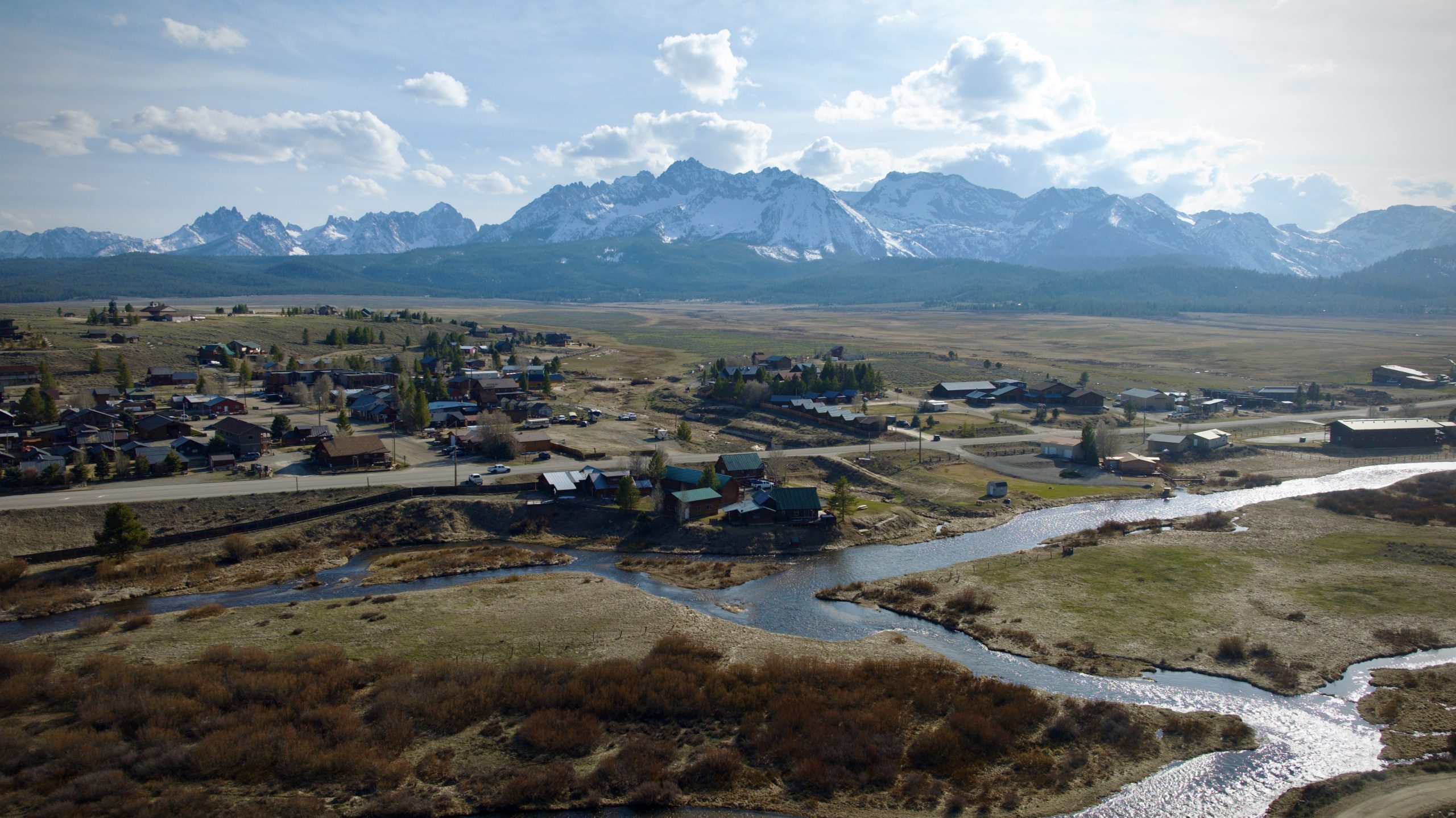
The Sun Valley real estate market in Q4 presents a dynamic landscape shaped by varying performance across property types. While residential segments continue to show resilience and steady demand, land and ranch properties reflect tighter supply and reduced liquidity, highlighting a market increasingly driven by pricing precision, property positioning, and evolving buyer behavior.
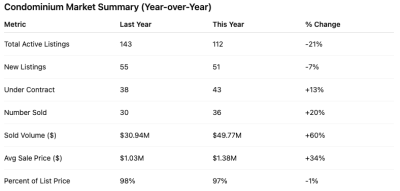
Condominium data shows tightening inventory (-21%) with relatively stable new listings (-7%), indicating constrained supply. Despite fewer actives, pending contracts (+13%) and closed sales (+20%) are up, signaling improved buyer activity. Sold volume surged (+60%) alongside a strong rise in average sale price (+34%), pointing to continued price appreciation, particularly in Ketchum and Warm Springs. Hailey shows notable transaction growth, though from a smaller base. Percent of list remains steady (~97%), suggesting balanced negotiations. Overall, the condo market appears resilient, with reduced inventory and rising prices driving competition, especially in core Sun Valley and Ketchum submarkets.
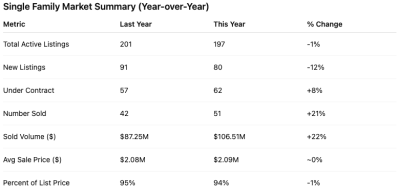
Single-family data shows a relatively stable but shifting market. Inventory is nearly flat (-1%), while new listings declined (-12%), indicating tightening supply. Pending contracts (+8%) and closed sales (+21%) suggest improved buyer activity. Sold volume rose (+22%), though average sale price remained essentially flat (+0%), signaling price stabilization. Submarket performance varies: Ketchum shows declining prices and volume, while Hailey and North of Ketchum posted strong gains. Bellevue also saw increased activity despite lower pricing. Percent of list slipped slightly (94%), indicating mild negotiation leverage. Overall, the market appears balanced, with steady demand but increased sensitivity to pricing, especially at the high end.
The land market shows a significant contraction year-over-year, with inventory dropping sharply (down ~80%+) and new listings nearly nonexistent, indicating extremely limited supply. Pending activity and closed sales are also down substantially, reflecting reduced transaction velocity. Total sold volume declined roughly 70%, alongside a modest drop in average sale price (~-9% to -16%), suggesting softening demand and pricing pressure. Despite this, select transactions still occur at strong list-to-sale ratios, indicating that well-positioned parcels can still command attention. Overall, the land market remains highly illiquid, with minimal inventory and sporadic sales driving volatility and limiting reliable trend interpretation.
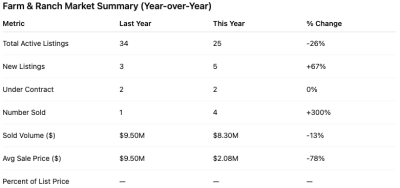
Farm and ranch activity remains extremely limited, with inventory declining year-over-year (34 to 25, -26%) and minimal new listings entering the market . Transactions are sparse but improving slightly, with sales increasing from 1 to 4 (+300%), though this is driven by very few deals. Total volume declined (-13%), while average sale price dropped sharply (-78%), indicating variability based on property mix rather than true market compression. Most activity is concentrated in isolated submarkets, with many areas showing no movement. Overall, this remains a highly illiquid, opportunistic segment where individual transactions—not trends—drive perceived value.
In summary, the market favors well-priced residential assets, particularly condos and select single-family homes, where demand remains active. Meanwhile, land and farm & ranch properties require patience and strategic positioning. As conditions evolve, success will depend on aligning pricing with market realities and targeting the right buyer pool effectively.